The 5 Levels of Production Readiness for an AI-Built App
Use this scale to decide how much operational care an application needs before the business relies on it. The right level depends on the consequences of failure, not on the size of the technology stack.
How production-ready does your application need to be?
Production readiness is not a switch that is either on or off. It is a level of care that should match what is at stake.
Level 1 — Prototype
Works for me.
This is suitable for demos, idea validation, and internal testing. The main requirement is that the functionality is good enough to learn from.
Level 2 — Launched
Other people can use it.
At this stage, you need a domain, production configuration, basic analytics, and a way to see obvious errors.
Level 3 — Production ready
We know when something important fails.
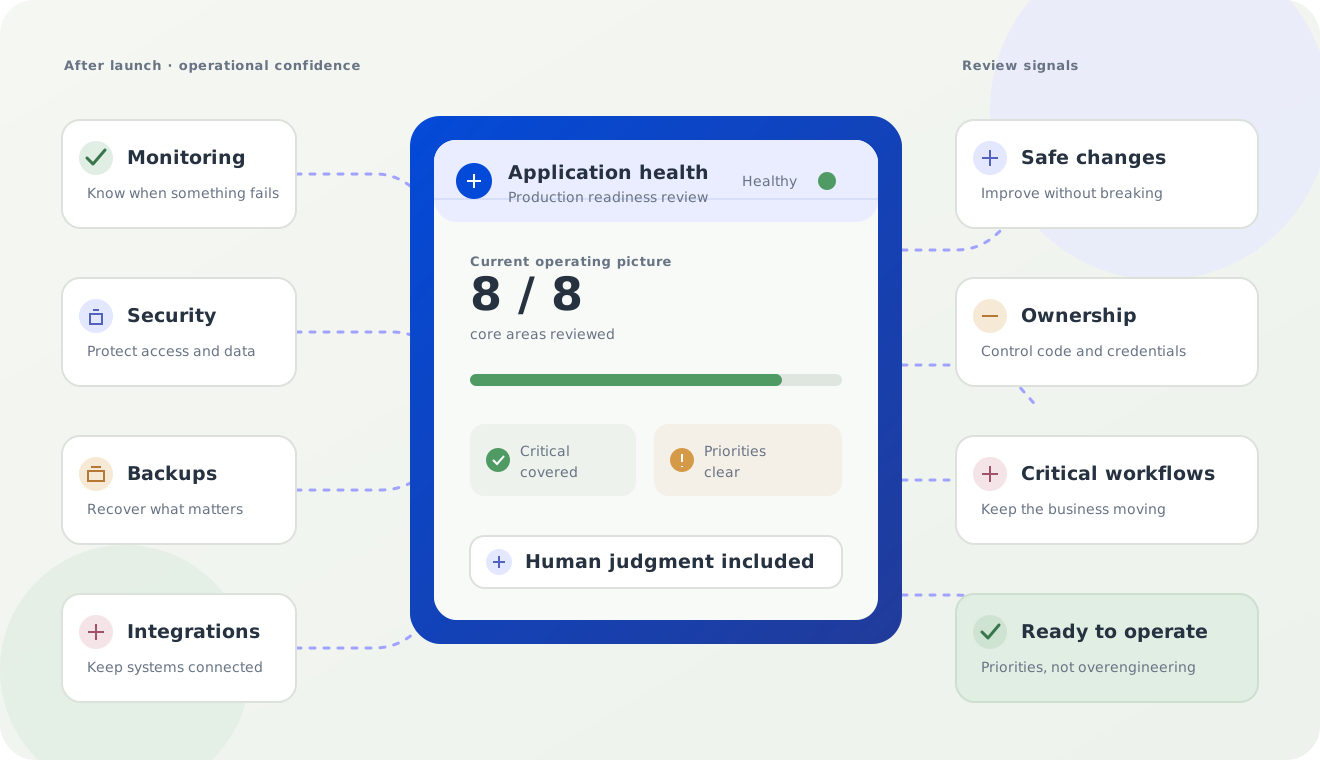
Typical requirements include monitoring, error visibility, a backup strategy, a security review, and tests for critical workflows.
Level 4 — Operational
Failures have predictable responses.
This usually means alerts, a few practical runbooks, a tested restore procedure, disciplined deployments, and a way to recover from integration failures.
Level 5 — Business critical
The business confidently depends on it.
This may call for service objectives, stronger operational controls, extensive monitoring, mature security practices, capacity planning, and structured incident response.
Most small businesses do not need Level 5. The right goal is enough operational maturity for the actual business risk—not enterprise engineering for its own sake.
Use the scale as a decision tool
The scale is useful because it replaces a vague question with a more specific one: what would happen if this application failed, and what level of preparation matches that consequence? A prototype does not need the same controls as a business-critical system. Treating both the same way wastes time in one case and leaves risk unaddressed in the other.
Start by writing down the role the application plays. Is it helping you test an idea, supporting an internal process, collecting inquiries, taking payments, or storing records that customers expect you to protect? Then identify the workflow whose failure would matter most. That workflow gives you a better starting point than a generic technology checklist.
The levels are not a certificate and they are not a promise that software cannot fail. They describe the confidence and response capability around the application. Moving from one level to the next should happen because the business has a reason to need more visibility, recovery, or control—not because a tool, framework, or vendor recommends a larger setup.
A practical review should also identify what is not needed yet. Load balancing, extensive incident processes, and enterprise infrastructure may be sensible later but distracting now. Calling that out is part of good technical judgment. It keeps the team focused on the risks that are real today and makes the next investment easier to explain.
What to review at each transition
Moving from Prototype to Launched usually means confirming the production configuration, domain, basic analytics, and a way to notice obvious errors. Moving from Launched to Production ready means looking at monitoring, backups, security, and the workflows that customers use. Moving from Production ready to Operational means documenting responses, testing restoration, and making deployments more disciplined.
Business-critical systems may need stronger controls, capacity planning, service objectives, and incident response. The important point is proportionality. You can make an application more dependable without pretending that every small product needs the operating model of a large platform.
These topics are connected. The questions tell you what to inspect, the readiness scale helps you decide how much care is proportionate, and the ownership checklist shows who must be able to act when something changes. Read the five-level readiness scale and the ownership checklist alongside this guide. For the broader argument, return to the Lovable launch guide.